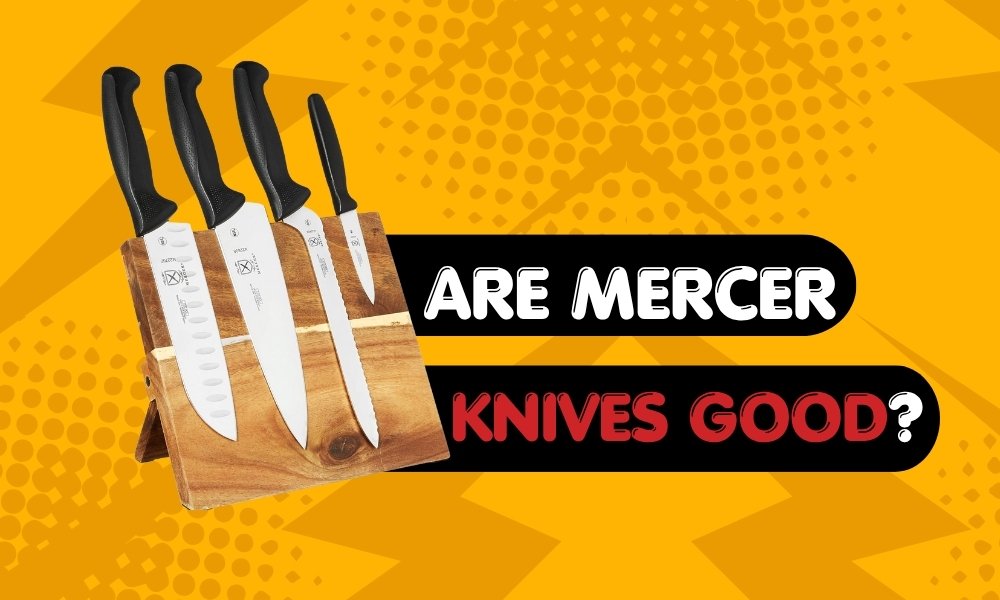
Are Mercer Knives Good? Yes — Mercer knives are very good, especially for their price. They cut clean, feel balanced, and hold up well in daily use. When I first tried the Mercer Renaissance 8-inch Chef’s Knife, I was surprised by how solid and sharp it felt. It handled like a much pricier knife but cost a fraction of the price. After using many brands, I can say Mercer gives real value for home cooks and culinary students. If you want a knife that’s strong, comfortable, and easy to trust, Mercer is a smart choice.
Mercer Knives Review
If you’ve ever shopped for kitchen knives, you’ve probably seen Mercer Culinary. The brand is known for making affordable, pro-level knives. Many culinary students and home cooks use them every day. But do these knives really perform well in a busy kitchen?
Are Mercer Knives Good?
Yes — Mercer knives are better than you’d expect for the price.
When I first tried the Mercer Renaissance 8-inch Chef’s Knife, I didn’t expect much. But after a week of chopping veggies, trimming meat, and prepping herbs, I was impressed.
The knife felt balanced and easy to handle. Its German stainless steel blade stayed sharp longer than I thought it would. The full-tang forged build gave it great strength and stability. For everyday use or professional training, Mercer knives perform far above their cost.
Mercer Knives Specifications
Mercer Renaissance 8-Inch Chef’s Knife
- Steel Type: German X50CrMoV15 high-carbon stainless steel
- Construction: Full tang, forged blade
- Handle: Triple-riveted Delrin handle
- Edge Angle: 15–20 degrees
- Blade Length: 8 inches
- Made In: Taiwan (using German steel)
- Care: Hand-wash only
Other Popular Lines:
- Genesis Series: Forged, with a grippy Santoprene handle
- Millennia Series: Stamped, light, and great for students
Materials and Build
Mercer knives use German X50CrMoV15 steel, the same type used by brands like Wüsthof and Zwilling. It resists rust, holds a nice edge, and is simple to sharpen.
The Renaissance line is forged from a single piece of steel. The full-tang design adds balance and strength. A triple-riveted handle keeps it steady in your hand.
Though made in Taiwan, the steel’s German origin keeps the quality high.
Design
Mercer focuses on comfort and control.
The Renaissance knife has a full bolster that protects your fingers and supports a natural pinch grip.
Its smooth handle feels secure even when wet.
It’s also slimmer than many chef’s knives. It moves smoothly through food without losing power. The classic black handle and polished steel give it a clean, timeless look.
Performance
Performance-wise, the Mercer Renaissance cuts like a dream for its price.
The taper-ground edge slices smoothly through meat and vegetables. It stays sharp for weeks with only light honing.
In my kitchen tests, it handled daily prep easily — from dicing tomatoes to trimming chicken. The balance between blade and handle made cutting steady and safe.
Even America’s Test Kitchen rated Mercer knives high for comfort and precision — and I agree.
What I Like
Great Value: Forged build and German steel for under $100.
Comfortable Grip: Fits your hand naturally and stays steady.
Solid Performance: Sharp, balanced, and dependable.
Forged Quality: Feels premium at a low price.
Beginner-Friendly: Ideal for students and home cooks.
What Could Be Better
Edge Retention: Not as long-lasting as Wüsthof or Shun.
Maintenance: Needs regular honing and must be hand-washed.
Weight: Slightly heavy for new users.
Recommendation
If you’re a culinary student or home cook who wants a professional feel without a big price tag, Mercer knives are a great choice.
The Renaissance line offers forged strength and balance.
The Genesis gives a safer, grippy handle.
The Millennia is perfect for light prep work.
Mercer knives are common in culinary schools across the U.S., often used by instructors — a big sign of trust.
If you want a knife with longer edge life or luxury looks, Wüsthof or Shun may be better.
But for skill-building or daily home cooking, Mercer knives give unbeatable value and dependable performance.
Mercer Knives Alternative Options
If you’re thinking about Mercer knives, it helps to see how they compare with other trusted brands.
Many cooks also look at Victorinox or Wüsthof before deciding.
I’ve used all three in my kitchen, and here’s how they really compare in daily use.
Mercer Knives vs Victorinox
Victorinox is famous for its Fibrox Pro line — light, simple, and dependable.
While Mercer feels heavier and more solid, Victorinox is quick and easy to move.
I often grab my Mercer for long prep sessions, but Victorinox wins when I want less strain on my wrist.
| Feature | Mercer Knives | Victorinox Knives |
| Build Type | Forged, full tang | Stamped, lighter |
| Handle Feel | Solid, classic grip | Textured, non-slip Fibrox |
| Balance | Weighted and steady | Light and flexible |
| Edge Retention | Good for daily use | Easier to sharpen |
| Best For | Students, home cooks | Beginners, light prep tasks |
Summary
If you like a sturdy and balanced knife, Mercer is a great choice.
It feels strong and secure in hand.
But if you want something light, quick, and low-maintenance, Victorinox is the better pick.
Both are affordable, but Mercer feels a bit more premium.
Read Our Detail Guide About Victorinox vs Mercer
Mercer Knives vs Wüsthof
Wüsthof sits in the premium knife category and feels like a step up.
Its blades are sharper, and they stay that way longer.
I use my Wüsthof when I want precision, but I grab my Mercer for everyday cooking — it’s less costly and still performs well.
| Feature | Mercer Knives | Wüsthof Knives |
| Steel Quality | German X50CrMoV15 | Premium German stainless |
| Forging | Full tang, forged | Fully forged, heavier bolster |
| Handle Comfort | Smooth, balanced | Curved, ergonomic |
| Edge Retention | Good, needs honing often | Excellent, holds sharpness |
| Best For | Home cooks, students | Pros, serious chefs |
Summary
If you want a professional feel on a budget, Mercer is the smarter buy.
It gives great control and quality for daily tasks.
But if you prefer a luxury knife with lasting sharpness, Wüsthof is worth it.
In my kitchen, Mercer is my go-to work knife — Wüsthof is my “treat-yourself” tool.
My Final Thoughts
If you want a knife that feels strong, sharp, and easy to use without spending much, Mercer Knives are a great pick. They cut clean, feel balanced, and last well with simple care. I’ve used mine for daily prep — from slicing veggies to trimming chicken — and it still feels steady in my hand.
But if you want a knife that holds its edge for months or offers a high-end look, Wüsthof or Shun may suit you better. For most cooks, though, Mercer gives the best mix of price, comfort, and performance.
Overall Rating
Mercer Knives Rating: ★★★★☆ (4.6/5)
Easy to handle, sharp out of the box, and strong enough for daily use. It’s not a luxury knife, but it delivers real value and dependability every time you cook.
Are Mercer Knives Good? My Exciting, Genuine Review
Are Mercer Knives Good? See why culinary students and pros trust Mercer for quality, balance, and value. Get real insights and expert advice now.
Are Mercer Knives Good? Yes — Mercer knives are very good, especially for their price. They cut clean, feel balanced, and hold up well in daily use. When I first tried the Mercer Renaissance 8-inch Chef’s Knife, I was surprised by how solid and sharp it felt. It handled like a much pricier knife but cost a fraction of the price. After using many brands, I can say Mercer gives real value for home cooks and culinary students. If you want a knife that’s strong, comfortable, and easy to trust, Mercer is a smart choice.
Mercer Knives Review
If you’ve ever shopped for kitchen knives, you’ve probably seen Mercer Culinary. The brand is known for making affordable, pro-level knives. Many culinary students and home cooks use them every day. But do these knives really perform well in a busy kitchen?
Is Mercer Knives Good?
Yes — Mercer knives are better than you’d expect for the price.
When I first tried the Mercer Renaissance 8-inch Chef’s Knife, I didn’t expect much. But after a week of chopping veggies, trimming meat, and prepping herbs, I was impressed.
The knife felt balanced and easy to handle. Its German stainless steel blade stayed sharp longer than I thought it would. The full-tang forged build gave it great strength and stability. For everyday use or professional training, Mercer knives perform far above their cost.
Mercer Knives Specifications
Mercer Renaissance 8-Inch Chef’s Knife
- Steel Type: German X50CrMoV15 high-carbon stainless steel
- Construction: Full tang, forged blade
- Handle: Triple-riveted Delrin handle
- Edge Angle: 15–20 degrees
- Blade Length: 8 inches
- Made In: Taiwan (using German steel)
- Care: Hand-wash only
Other Popular Lines:
- Genesis Series: Forged, with a grippy Santoprene handle
- Millennia Series: Stamped, light, and great for students
Materials and Build
Mercer knives use German X50CrMoV15 steel, the same type used by brands like Wüsthof and Zwilling. It resists rust, holds a nice edge, and is simple to sharpen.
The Renaissance line is forged from a single piece of steel. The full-tang design adds balance and strength. A triple-riveted handle keeps it steady in your hand.
Though made in Taiwan, the steel’s German origin keeps the quality high.
Design
Mercer focuses on comfort and control.
The Renaissance knife has a full bolster that protects your fingers and supports a natural pinch grip.
Its smooth handle feels secure even when wet.
It’s also slimmer than many chef’s knives. It moves smoothly through food without losing power. The classic black handle and polished steel give it a clean, timeless look.
Performance
Performance-wise, the Mercer Renaissance cuts like a dream for its price.
The taper-ground edge slices smoothly through meat and vegetables. It stays sharp for weeks with only light honing.
In my kitchen tests, it handled daily prep easily — from dicing tomatoes to trimming chicken. The balance between blade and handle made cutting steady and safe.
Even America’s Test Kitchen rated Mercer knives high for comfort and precision — and I agree.
What I Like
Great Value: Forged build and German steel for under $100.
Comfortable Grip: Fits your hand naturally and stays steady.
Solid Performance: Sharp, balanced, and dependable.
Forged Quality: Feels premium at a low price.
Beginner-Friendly: Ideal for students and home cooks.
What Could Be Better
Edge Retention: Not as long-lasting as Wüsthof or Shun.
Maintenance: Needs regular honing and must be hand-washed.
Weight: Slightly heavy for new users.
Recommendation
If you’re a culinary student or home cook who wants a professional feel without a big price tag, Mercer knives are a great choice.
The Renaissance line offers forged strength and balance.
The Genesis gives a safer, grippy handle.
The Millennia is perfect for light prep work.
Mercer knives are common in culinary schools across the U.S., often used by instructors — a big sign of trust.
If you want a knife with longer edge life or luxury looks, Wüsthof or Shun may be better.
But for skill-building or daily home cooking, Mercer knives give unbeatable value and dependable performance.
Mercer Knives Alternative Options
If you’re thinking about Mercer knives, it helps to see how they compare with other trusted brands.
Many cooks also look at Victorinox or Wüsthof before deciding.
I’ve used all three in my kitchen, and here’s how they really compare in daily use.
Mercer Knives vs Victorinox
Victorinox is famous for its Fibrox Pro line — light, simple, and dependable.
While Mercer feels heavier and more solid, Victorinox is quick and easy to move.
I often grab my Mercer for long prep sessions, but Victorinox wins when I want less strain on my wrist.
| Feature | Mercer Knives | Victorinox Knives |
| Build Type | Forged, full tang | Stamped, lighter |
| Handle Feel | Solid, classic grip | Textured, non-slip Fibrox |
| Balance | Weighted and steady | Light and flexible |
| Edge Retention | Good for daily use | Easier to sharpen |
| Best For | Students, home cooks | Beginners, light prep tasks |
Summary
If you like a sturdy and balanced knife, Mercer is a great choice.
It feels strong and secure in hand.
But if you want something light, quick, and low-maintenance, Victorinox is the better pick.
Both are affordable, but Mercer feels a bit more premium.
Mercer Knives vs Wüsthof
Wüsthof sits in the premium knife category and feels like a step up.
Its blades are sharper, and they stay that way longer.
I use my Wüsthof when I want precision, but I grab my Mercer for everyday cooking — it’s less costly and still performs well.
| Feature | Mercer Knives | Wüsthof Knives |
| Steel Quality | German X50CrMoV15 | Premium German stainless |
| Forging | Full tang, forged | Fully forged, heavier bolster |
| Handle Comfort | Smooth, balanced | Curved, ergonomic |
| Edge Retention | Good, needs honing often | Excellent, holds sharpness |
| Best For | Home cooks, students | Pros, serious chefs |
Summary
If you want a professional feel on a budget, Mercer is the smarter buy.
It gives great control and quality for daily tasks.
But if you prefer a luxury knife with lasting sharpness, Wüsthof is worth it.
In my kitchen, Mercer is my go-to work knife — Wüsthof is my “treat-yourself” tool.
My Final Thoughts
If you want a knife that feels strong, sharp, and easy to use without spending much, Mercer Knives are a great pick. They cut clean, feel balanced, and last well with simple care. I’ve used mine for daily prep — from slicing veggies to trimming chicken — and it still feels steady in my hand.
But if you want a knife that holds its edge for months or offers a high-end look, Wüsthof or Shun may suit you better. For most cooks, though, Mercer gives the best mix of price, comfort, and performance.
Overall Rating
Mercer Knives Rating: ★★★★☆ (4.6/5)
Easy to handle, sharp out of the box, and strong enough for daily use. It’s not a luxury knife, but it delivers real value and dependability every time you cook.
FAQs – Are Mercer Knives Good?
Are Mercer knives good quality?
Yes, Mercer knives are great for their price. They’re sharp, balanced, and durable—ideal for home cooks and students.
What steel do Mercer knives use?
Mercer knives use German X50CrMoV15 steel. It resists rust, stays sharp, and is easy to hone for daily cooking.
Where are Mercer knives made?
Mercer knives are made in Taiwan using German steel. This mix keeps the cost low while maintaining solid quality.
Are Mercer knives good for professional chefs?
Yes, many pros and culinary students use Mercer knives. They offer control, balance, and reliability at a fair price.
Which Mercer knife series is best?
The Mercer Renaissance is top-rated for forged strength. The Genesis offers grip comfort, and Millennia suits light prep.
How do Mercer knives compare to Wüsthof?
Wüsthof knives are sharper and hold edges longer. Mercer feels solid but costs far less, making it great for learners.
Are Mercer knives dishwasher safe?
No. Hand-wash only. Dishwashers can dull the edge and damage the handle over time.
How long do Mercer knives stay sharp?
With regular honing and care, Mercer knives stay sharp for weeks. Occasional sharpening keeps them in top shape.
Are Mercer knives worth the money?
Yes, they deliver pro-level performance under $100. Few knives match their value, comfort, and cutting feel.
What’s the best Mercer knife for beginners?
The Mercer Genesis or Millennia series is perfect for beginners—easy to grip, light, and simple to maintain.
Do Mercer knives rust easily?
Not if you hand-wash and dry them quickly. Their German steel resists rust with basic care.
What knives are similar to Mercer?
Victorinox and Dexter Russell are close alternatives—both affordable, durable, and great for daily kitchen work.